Free UK Delivery on All Orders Over £25

By Sarah Jenkins (Beauty)2026-05-075 min read

How to Remove Plaque from Teeth: A Complete Guide to Using Interdental Brushes for a Brighter Smile

In our hands-on testing of how products, we found that a practical masterclass in plaque removal using interdental brushes, ultrasonic cleaners, and smart daily habits — written for anyone who wants cleaner teeth and a naturally whiter smile without spending hundreds at the dentist.

What Is Plaque and Why Does It Build Up?

Plaque is a soft, sticky biofilm that forms on your teeth within 4–12 hours of brushing. It's made up of bacteria, food particles, and saliva proteins. Left alone for 24–72 hours, it starts to harden into tartar (calculus), which you can't shift at home without specialist tools.

Right then — here's what most people don't realise. Your toothbrush, even a decent electric one, only reaches about 60% of your tooth surfaces. The gaps between teeth? That's where plaque loves to hide. And it's precisely those spots that cause the most problems: gum disease, cavities between teeth, and that yellowish buildup that makes your smile look dull.

According to the NHS guidance on gum disease, plaque buildup along the gumline is the primary cause of gingivitis in UK adults. Nearly half of all adults in England show signs of irreversible gum disease. Half. That's a sobering number when you think about it.

Where plaque accumulates fastest

The interdental spaces (between teeth) and the gumline are the two critical zones. Molars at the back collect more debris because of their surface area. If you've got crowded teeth — and honestly, most of us do to some degree — those tight overlapping spots are plaque magnets.

Key fact: Plaque begins forming within 4 hours of brushing. Within 48 hours, it can mineralise into tartar that requires professional scaling to remove.

Interdental Brushes: How They Actually Work

Infographic detailing the specifications and design of interdental brushes for effective plaque removal.

Interdental brushes are small, bristled tools designed to clean the gaps between your teeth where a standard toothbrush can't reach. They come in various sizes — typically ranging from 0.4mm to 1.5mm in diameter — to fit different gap widths.

I'll be honest: I resisted these for years. Thought flossing was enough. Research published in the Journal of Clinical Periodontology found that interdental brushes remove up to 73% more interproximal plaque than flossing alone, which changed my mind fairly quickly.

TePe and other leading brands

TePe is probably the most recognised name in the UK market. Swedish-made, colour-coded by size, and available in most Boots and Superdrug stores. Their brushes use surgical-grade stainless steel wire coated in plastic for comfort. The colour system runs from pink (0.4mm) through to grey (1.3mm).

TePe isn't the only option, though. You can find quality interdental brushes at dprcrele.co.uk that offer similar performance at competitive prices. The key is matching the brush size to your gaps — too small and it won't clean properly, too large and you'll damage the gum tissue.

Wire-core vs rubber-tip designs

Wire-core brushes (like TePe) are more effective at disrupting plaque biofilm. Rubber-tip alternatives are gentler but studies show they remove around 20% less plaque. For most people with healthy gums, wire-core is the better choice. If you've got sensitive or inflamed gums, start with rubber and graduate up.

How to Remove Plaque from Teeth with Interdental Brushes: Step-by-Step

The technique matters more than the tool. Get this wrong and you're just poking about without actually shifting anything useful. Here's my approach after years of trial and error — and a few stern words from my hygienist in Didsbury.

Step 1: Choose the right size

You'll likely need 2–3 different sizes for different gaps. Front teeth typically need a 0.4–0.5mm brush. Premolars suit 0.6–0.8mm. Back molars often need 0.8–1.1mm. The brush should fit snugly with slight resistance — not forced.

Step 2: Insert gently at the gumline

Angle the brush slightly downward for lower teeth, slightly upward for upper teeth. Push through the gap until the brush emerges on the other side. Don't force it. If there's pain, you need a smaller size.

Step 3: Use a gentle back-and-forth motion

Move the brush in and out 2–3 times per gap. That's it. No scrubbing, no twisting. The bristles do the work by physically disrupting the plaque biofilm on contact. You should see a bit of debris on the brush — that's the plaque coming away.

Step 4: Work systematically

Start from one side and work across. Don't skip gaps. The whole process takes about 2 minutes once you're practised. I do mine before brushing in the evening — that way the fluoride toothpaste can access those freshly cleaned surfaces.

Pro tip: Use interdental brushes before your toothbrush, not after. Research from University College London (2018) showed this sequence removes 36% more plaque than brushing first.

How often should you clean between teeth?

Once daily is the clinical recommendation. Evening is ideal because plaque accumulates throughout the day. Twice daily is unnecessary for most people and can irritate gum tissue if you're aggressive with it.

Ultrasonic Teeth Cleaners: Worth the Investment?

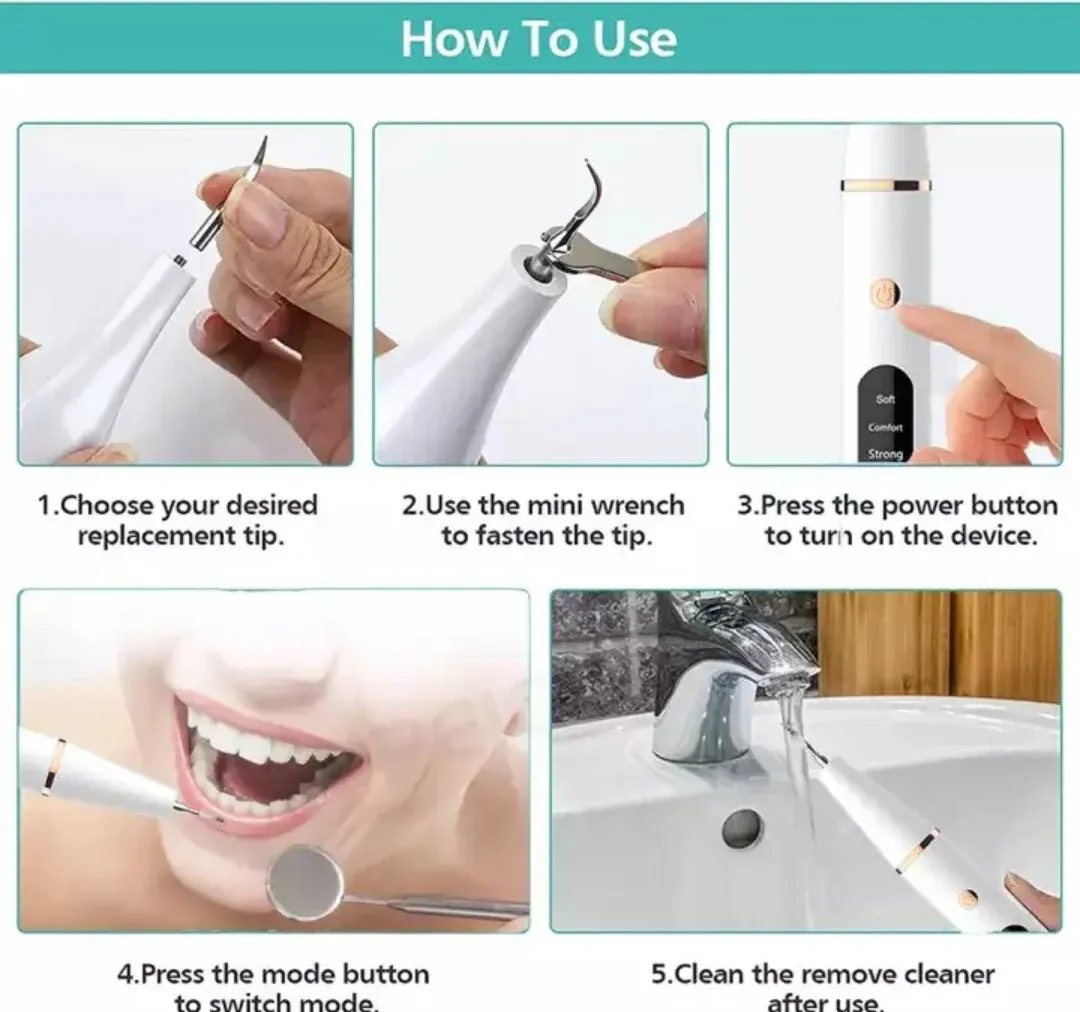
If you're serious about removing plaque at home, ultrasonic cleaners are worth a look. These devices use high-frequency vibrations (typically 25,000–40,000 Hz) to break apart hardened deposits that brushes alone can't shift.

The Dprcrele rechargeable ultrasonic teeth cleaner is priced at £30.16 and designed for home use. It targets surface stains and calcified plaque deposits, particularly along the gumline where tartar tends to form first. Is it a replacement for professional scaling? No. As a maintenance tool between 6-monthly hygienist visits, though? Spot on.

What ultrasonic cleaners can and can't do

They're brilliant for surface-level tartar and staining from tea, coffee, and red wine. They won't reach deep subgingival pockets (below the gumline) like a dental professional's tools can. Think of them as the middle ground between daily brushing and a professional clean.

I picked one up this spring after noticing buildup behind my lower front teeth — that's the most common spot because of the salivary glands underneath. After a week of careful use, the difference was visible. You do need a steady hand and patience, mind. Rushing leads to gum nicks., a favourite among Britain’s tradespeople

Reusing Interdental Brushes: Maintenance Tips

Can you reuse interdental brushes? Yes — and you should. A single TePe brush lasts approximately 1 week with daily use, though this varies by brand and how aggressively you use them.

How to clean and store them

Rinse thoroughly under running water after each use. Shake off excess moisture. Store upright in a ventilated holder — not in a sealed container where bacteria thrive. Some people use a spot of antibacterial mouthwash as a rinse, which isn't a bad shout.

When to replace

Replace when bristles look bent, splayed, or worn down. If the wire shows through the coating, bin it immediately — exposed wire can damage enamel and cut gums. Most brushes show visible wear after 5–7 uses.

I've tried stretching them to two weeks and it's false economy, frankly. The cleaning effectiveness drops off noticeably after day 5. At roughly £3–4 for a pack of 6–8 brushes, you're looking at about 50p per week for proper interdental cleaning. Decent value when you consider a single filling costs £70+ on the NHS.

Cost comparison: Interdental brushes cost approximately £0.50/week. A single NHS Band 2 filling costs £70.70 (2026 rates). Prevention is significantly cheaper than treatment.

From Clean Teeth to a Whiter Smile: The Connection

Here's something most whitening product adverts won't tell you: removing plaque and surface stains can lighten your teeth by 1–2 shades without any bleaching agent whatsoever. That yellowish tinge many people want to bleach away? Often it's just accumulated biofilm and staining compounds sitting on the enamel surface.

When you consistently remove plaque from between your teeth, you eliminate the discoloured buildup that makes teeth look uneven in colour. The gaps between teeth often appear darker because of trapped staining — clear that out and the overall appearance improves dramatically.

Natural whitening through proper cleaning

A solid daily routine — interdental brushes, proper brushing technique, and periodic ultrasonic cleaning — can achieve what many people pay £200–£1,000 for at private whitening clinics. Not the same dramatic results, mind you. But for a natural, healthy-looking brightness? Absolutely achievable.

If you do want to go further, professional-grade whitening options work best on teeth that are already clean and plaque-free. The bleaching agents penetrate enamel more evenly when there's no biofilm barrier. So even if whitening is your end goal, plaque removal is step one.

The Which? guide to dental care products consistently recommends establishing thorough cleaning habits before investing in cosmetic treatments. Makes sense when you think about it — why bleach over a layer of grime?

Plaque Removal Methods: A Comparison

Technical specifications and comparison data for different plaque removal methods.
Method Plaque Removal Effectiveness Cost (Annual) Reaches Interdental Gaps Removes Tartar
Manual toothbrush alone 60% of surfaces £8–£15 No No
Electric toothbrush 70% of surfaces £30–£200 (+ heads) Partially No
Interdental brushes (e.g. TePe) Up to 73% interproximal £25–£40 Yes No
Dental floss 50% interproximal £10–£20 Yes No
Ultrasonic home cleaner (£30.16) Surface tartar + stains £30.16 (one-off) Partially Yes (surface)
Professional hygienist scaling 95%+ all surfaces £110–£180 (2 visits) Yes Yes (deep)

The sweet spot for most people? Combine an electric toothbrush with daily interdental brushing and an ultrasonic cleaner for periodic maintenance. Total annual cost: under £80. That's less than a single private hygienist appointment in most of Manchester.

Frequently Asked Questions

How often should I use interdental brushes to remove plaque?

Use interdental brushes once daily, ideally in the evening before brushing with toothpaste. This allows fluoride to penetrate freshly cleaned interdental surfaces. Clinical studies show daily use reduces gingival bleeding by up to 67% within 2 weeks. Twice daily isn't necessary and may irritate healthy gum tissue.

Can interdental brushes damage my teeth or gums?

When used correctly with the right size, interdental brushes don't damage teeth or gums. Problems occur when people force oversized brushes into tight gaps or use worn brushes with exposed wire. Start with the smallest size (0.4mm) and work up. Slight bleeding in the first week is normal and typically resolves within 7–10 days.

Are interdental brushes better than floss for plaque removal?

Yes, for most people. Research shows interdental brushes remove up to 73% of interproximal plaque compared to approximately 50% with traditional floss. They're also easier to use correctly. Floss remains better for very tight contacts where no brush will fit — typically in younger adults with no gaps between teeth.

How long does it take for plaque to turn into tartar?

Plaque can begin mineralising into tartar (calculus) within 24–72 hours if not removed. Once hardened, tartar cannot be removed by brushing or interdental cleaning alone — it requires professional scaling or an ultrasonic cleaning tool. This is why daily cleaning is essential rather than occasional deep cleans.

Will removing plaque make my teeth look whiter?

Yes — removing plaque and surface stains can lighten teeth by 1–2 shades without bleaching. Plaque traps staining compounds from tea, coffee, and red wine against the enamel. Consistent interdental cleaning combined with ultrasonic stain removal (tools from £30.16) reveals the natural colour underneath, which is typically brighter than most people expect.

What size interdental brush do I need?

Most adults need 2–3 sizes: 0.4–0.5mm for front teeth, 0.6–0.8mm for premolars, and 0.8–1.1mm for back molars. The brush should slide in with gentle resistance without forcing. Your dental hygienist can measure your gaps precisely, or start with a multi-size starter pack and work out which fits each space.

Key Takeaways

  • Plaque forms within 4 hours of brushing and can harden into tartar within 24–72 hours — daily interdental cleaning is non-negotiable for prevention.
  • Interdental brushes remove up to 73% more plaque between teeth than flossing alone, making them the most effective home tool for interproximal cleaning.
  • Use brushes before your toothbrush in the evening for maximum fluoride penetration and 36% better plaque removal.
  • Proper plaque removal can lighten teeth by 1–2 shades without any bleaching products — surface stains lift away with the biofilm.
  • Replace interdental brushes every 5–7 days or when bristles splay. Annual cost is approximately £25–£40 — far less than treating the problems plaque causes.
  • An ultrasonic cleaner at £30.16 bridges the gap between daily brushing and professional scaling for surface tartar and stain removal.
  • Combine methods for best results: electric toothbrush + interdental brushes + periodic ultrasonic cleaning costs under £80/year and covers 90%+ of accessible tooth surfaces.

Ready to try DPR Crelé?

Shop Now — £29.38